WSOP 2025: Players Who Can Boost Their Bracelet Tally
17 Dec 2025Read More
Top 5 Beginner Mistakes in Hold’em
- Key errors made by beginners in a Hold’em game
- Crucial fixes to avoid common mistakes made
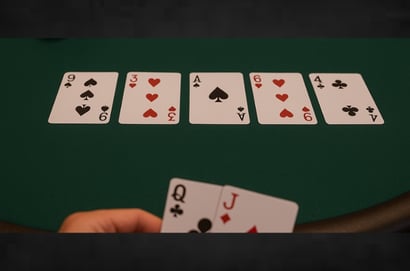
Beginners in Hold’em often fall into certain traps that limit their success in the card game. This article highlights five of the most frequent mistakes and provides tactical fixes for each.
Learning Hold’em involves more than memorizing hand rankings or betting structures. Success comes from consistently avoiding fundamental mistakes that many beginners repeat.
These errors often stem from impatience, misunderstanding basic concepts, or failing to think strategically.
Below are five of the most common beginner mistakes in Hold’em, each explored with examples and corrective approaches that can help develop a more disciplined and effective playing style.
Playing Too Many Hands Preflop
One of the most damaging mistakes new players make is entering the pot with too many hands. The excitement of playing every hand or the fear of missing out on action leads to calls and raises with weak holdings.
Fix
Use a tight hand selection chart based on position. For example, from early position, stick to premium hands such as A♠A♦, K♠K♣, Q♠Q♥, and A♠K♠. Broaden your range only as you gain positional advantage or develop better post-flop skills.
Calling Too Much Instead of Raising or Folding
New players often default to calling bets out of fear or uncertainty, creating a passive playing style that rarely wins over time. This "calling station" mentality means they frequently invest chips without applying pressure or folding in spots where equity is too low.
Fix
Start thinking in ranges and understand fold equity. If your hand isn’t strong enough to raise and lacks post-flop potential, fold pre-flop. If it’s good enough to challenge, consider raising instead of flat-calling. Poker is a game of pressure, not passivity.
Ignoring Position at the Table
Understanding position is one of the most important strategic concepts in Hold’em. Beginners who ignore position often find themselves out of step with the flow of action, making weak decisions without full information.
Fix
Respect position. Play tighter in early positions and wider in later ones. On the button or in the cutoff, you have more information and can profitably play a wider range of hands, while early positions demand discipline and a strong range.
Failing to Think in Hand Ranges
Beginners often try to “put someone on a hand,” assigning a specific holding instead of considering a range of possible hands. This leads to poor decisions and misreads.
Fix
Start thinking in terms of ranges: What hands would your opponent raise pre-flop? What hands would continue betting on each street? Assign a range (e.g., 88–JJ, A♠T♠, Q♠J♠) and reduce possibilities as more cards are revealed. This analytical approach provides clarity under pressure.
Neglecting Table Selection
Many new players sit at the first available table, unaware of the importance of game selection. Playing against skilled regulars or in tight games with little action can quickly drain a bankroll.
Fix
Select soft games with loose players and visible action. Look for tables with high average pot sizes and multiple players seeing flops. In live settings, observe games before sitting down and seek out passive or erratic opponents to increase your edge.
Building a Solid Foundation in Hold’em
Avoiding the above five beginner mistakes in Texas Hold’em provides a solid base for long-term improvement.
From disciplined hand selection and positional awareness to effective range thinking and smart table selection, each adjustment increases your overall win rate.
Learning poker is a continuous process. As skills sharpen and awareness improves, reducing these common errors will lead to more profitable sessions and deeper runs in tournaments or cash games.
Understanding poker fundamentals is not about shortcuts—it’s about eliminating poor habits and replacing them with strong, repeatable strategies that stand up against every level of competition.
Upcoming Events
09 October 2026
10 October 2026
Malta Poker Festival Autumn Edition Poker
Malta Poker Festival: Massive €3 Million Guarantee Highlighted for Autumn Series
European Mixed Poker Championship 2026 Poker
Tallinn to Host Inaugural European Mixed Poker Championship 2026 this October
Battle of Malta Autumn Edition 2026 Poker
Previewing the Battle of Malta October 2026: What to Expect This Autumn
APT Championship Taipei 2026 Poker
APT Championship Taipei 2026 Set for November at Asia Poker Arena
Poker North Masters 2027 Poker
Poker North Masters Returns to Bratislava With €1K Main Event and 12 Days of Action
30 October 2026
Poker EventsStarts in
Latest News
-
 Pros to lookout for
 -
AI Poker Image FailThe Vietnam Poker Image that AI Couldn’t Handle16 Dec 2025Read More
-
Eat Cheap in Las VegasCheap Eats in Las Vegas16 Dec 2025Read More
-
InterviewVamos Poker Tour: Revolutionizing Live Poker Across Europe24 Jun 2025Read More
-
Must ReadTop 5 Beginner Mistakes in Live PLO16 Jun 2025Read More