Top Crypto Poker Sites For May 2026: What's Buzzing Right Now?
09 Oct 2026Read More
Top 5 Beginner Mistakes in Live PLO
- Mistakes made in a live PLO game
- Fixes for beginner errors in PLO
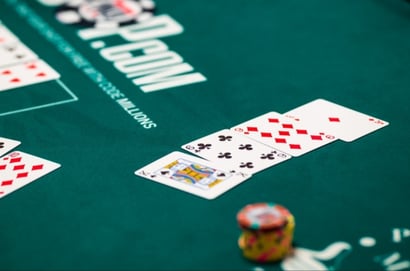
Image Credit: Danny Maxwell/Pokernews
New to live Pot-Limit Omaha? Learn the five biggest beginner mistakes—including poor hand selection, ignoring stack depth, and misplaying position—and how to fix them. Mastering these fundamentals will elevate your live PLO sessions and decision-making.
Imagine you’re seated at a live PLO table, cards in hand, the soft click of chips echoing around you—and suddenly you realize you’ve just doubled down on a marginal hand that’s about to cost you dearly.
We’ve all been there, but the good news is that by spotting—and fixing—just a few common missteps, you can turn those painful moments into stepping stones for consistent winning. Below is your playbook to dodge the top five live-PLO pitfalls and start building stronger and more confident sessions.
Why Live PLO Demands a Different Mindset
Think of live PLO as a friendly puzzle: you watch players’ moves, feel the table’s rhythm, and adjust your bets as stacks grow or shrink. With this simple mindset, you’ll turn each session into a clear, winning game.
Here are five of the most common pitfalls that new players fall into in Pot-Limit Omaha—first at the live felt, then at the online tables. Catching and correcting these habits early will set you up for faster, more sustainable progress.
Top 5 Live PLO Mistakes
Overvaluing Wrapped Hands
- What happens: You see hands like A K Q J or 9 8 7 6 and assume they’re monsters no matter what.
- Why it hurts: Live games are slower and your opponents tend to call wider; a wrap without a nut draw often gets you in trouble.
- Forward fix: Focus on nut or near-nut draws (e.g., those containing an ace or double-suited combos). Play wraps cautiously unless they’re guaranteed best straight.
Playing Too Many Hands Out of Position
- What happens: You limp or call raises from early seat with marginal hands.
- Why it hurts: In live PLO, it’s very hard to control the pot size or extract value when you’re out of position and the pot grows quickly.
- Forward fix: Be selective about opening or calling out of position—stick to premium double-suited aces or connectivity that’s hard to reverse.
Ignoring Stack Dynamics
- What happens: You don’t adjust play when stacks are shallow
- (e.g., 25–40 bb), treating each hand like deep-stack PLO.
- Why it hurts: Shallow-stack PLO is a push/fold game—betting big with draws is suicide.
- Forward fix: When stacks dip below ~50 bb, tighten up and shift gears into high-equity, high-nut
Under-reading Physical Tells
- What happens: You focus only on your cards and miss size/timing tells from opponents.
- Why it hurts: Live reads are a huge edge—bet timing, body language, stack slides can clue you into strength or weakness.
- Forward fix: Pick one subtle tell (chip slide speed, breathing, posture) and watch it for a session—build a read inventory over time.
Pot Control Failure
- What happens: You let the pot balloon on coordinated boards without clear nut holdings.
- Why it hurts: Without position and strong hand, big pots in live often end in losing river bets.
- Forward fix: When you flop a marginal hand (e.g., second-nut wrap, single-suited), size down your continuation bets or check behind and re-evaluate on later streets.
Upcoming Events
10 October 2026
Malta Poker Festival Autumn Edition Poker
Malta Poker Festival: Massive €3 Million Guarantee Highlighted for Autumn Series
European Mixed Poker Championship 2026 Poker
Tallinn to Host Inaugural European Mixed Poker Championship 2026 this October
Battle of Malta Autumn Edition 2026 Poker
Previewing the Battle of Malta October 2026: What to Expect This Autumn
APT Championship Taipei 2026 Poker
APT Championship Taipei 2026 Set for November at Asia Poker Arena
Poker North Masters 2027 Poker
Poker North Masters Returns to Bratislava With €1K Main Event and 12 Days of Action
30 October 2026
Poker EventsStarts in
Latest News
-
 Best Crypto Poker Site
 -
Top Value For $1!Play BCPoker’s $1 Golden One $1,111 GTD Today September 210 Sep 2026Read More
-
WPT Tokyo CancelledWPT Tokyo 2026 Cancelled Over Regulatory Concerns07 Sep 2026Read More
-
Irish Open Sydney 2026Irish Open Breaks New Ground as First Sydney Festival Gets Underway02 Sep 2026Read More
-
$109 Ticket Under $1How to Qualify for the $5M Sunday Million Anniversary on PokerStars30 Aug 2026Read More