WPT Global Opens $1.10 Qualification Path to WPT Seoul
23 Sep 2026Read More
Poker Icons of the 2000s
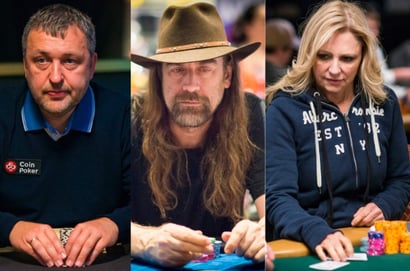
Image Credit: PGT.com & Pokernews.com
In this article, we’ll look at some poker players who grabbed headlines with their stellar play.
In the early 2000s, poker wasn’t just a game—it was a phenomenon. Chris Moneymaker’s legendary 2003 WSOP Main Event win, after qualifying through a humble online satellite, changed everything.
Once his incredible rags-to-riches story hit the front pages, poker exploded into the mainstream almost overnight. Suddenly, kitchen-table games gave way to glitzy televised tournaments, and countless amateurs began dreaming of turning pro.
Some players rode the wave to stardom, becoming household names. But where are those poker boom icons today?
Some are still battling at the felts, while others have traded their chips for quieter lives. Here’s a look at the stars who defined the poker boom.
Chris Ferguson

Chris “Jesus” Ferguson, with his signature long hair and cowboy hat, became one of the most recognizable faces in poker during the 2000s.
Ferguson (founder of Full Tilt Poker) was once celebrated as both a brilliant player and an entrepreneur. That changed on "Black Friday" in 2011, when the U.S. government shut down major online poker sites, including Full Tilt.
Investigators revealed that Full Tilt had operated more like a Ponzi scheme, mismanaging player funds.
Ferguson withdrew from public life for several years, only returning to poker in 2016.
In a move that angered many fans, he reappeared at several World Series of Poker (WSOP) events and even won WSOP Player of the Year in 2017.
However, his return was met with widespread backlash. Many players felt Ferguson never fully accepted responsibility for Full Tilt’s collapse. His brief apology video in 2018 was widely criticized as vague and insincere.
Ferguson’s last recorded tournament results came in 2020 during the WSOP Online Series on GGPoker. He had several notable finishes, including 9th place in a $600 event for $14,405 and 54th place in the $10,000 Super MILLION$ event for $29,160.
Since then, Ferguson has disappeared from the public eye. With no social media presence and no recent tournament appearances, it appears he now prefers a private life away from the poker world.
Dutch Boyd

Dutch Boyd was one of the early "bad boys" of the poker boom. With his bold style and colorful personality, Boyd made a name for himself after finishing 12th in the 2003 WSOP Main Event—the same year Chris Moneymaker stunned the poker world with his Main Event win.
Boyd’s career has been a rollercoaster. He faced numerous controversies, including legal troubles and battles with addiction. Despite these setbacks, he managed to capture three WSOP bracelets over his career.
Though Boyd has faded from the high-stakes spotlight, he continues to play. In 2023, he finished 2nd in the WSOP $10,000 Mixed Games: Dealer’s Choice Championship, showing he still has skills at the table.
Some admire Boyd’s resilience and talent, while others criticize his controversial past. Nonetheless, his story remains an essential chapter in poker's boom-era history.
Jennifer Harman

Jennifer Harman was one of the most recognizable female poker players during the poker boom period. Known for her calm demeanor and strategic mind, she was a regular in the high-stakes cash games in Las Vegas.
Today, Harman has largely stepped away from the tournament spotlight. However, she hasn’t completely left poker behind.
Although she rarely appears in tournaments—her last recorded live tournament cash was in June 2024—Harman still plays poker casually.
She’s often spotted in high-stakes cash games, sometimes alongside legends like Todd Brunson and David Benyamine.
But poker is no longer her top priority. As a mother to twin boys, Harman now dedicates much of her time to family life.
Despite her reduced visibility, her contributions to the game haven’t been forgotten. She was inducted into the Poker Hall of Fame in 2015 alongside John Juanda. Her career earnings total approximately $2.92 million, and she boasts 44 WSOP cashes.
Though she no longer chases titles and big cash prizes, Jennifer Harman’s love for the game continues. Poker for her has evolved from a profession into a hobby—one she clearly still enjoys.
Tony G

If entertainment had a face in poker during the 2000s, it would be of Antanas “Tony G” Guoga. Famous for his ruthless table talk and relentless needling of opponents, Tony G turned poker tables into a stage for psychological warfare.
Though he doesn’t play as often today, Tony G still occasionally competes at the highest levels. In 2022, he had a series of impressive finishes, including a 10th-place cash for $485,000 in the $200,000 Coin Rivet Invitational at the Triton Poker Super High Roller Series in Cyprus.
That same year, he also won the $10,400 Mediterranean Poker Party (MPP) High Roller for $257,500 and finished second in two major events: the €25,500 PGT Italy Pot-Limit Omaha event in Venice and the €100,000 Short Deck Main Event at the Triton Poker Series in Madrid—the latter earning him $1,389,436.
Outside of poker, Tony G has shifted much of his focus to business and politics. He’s heavily involved in cryptocurrencies and NFTs, and has even served as a member of the European Parliament for Lithuania.
While he plays less frequently, Tony G still makes occasional tournament appearances, bringing his trademark poker drama with him.
Viktor “Isildur1” Blom

Few names in online poker have captivated the poker world like Viktor Blom, better known by his screen name "Isildur1." His fearless style and willingness to play anyone made him a legend almost overnight.
Blom exploded onto the online scene in 2009, taking on the biggest names on Full Tilt Poker, including Phil Ivey, Patrik Antonius, and Tom Dwan.
His aggressive, high-variance style led to massive swings. At his peak, he won around $6 million—but just as quickly, he lost $4.2 million in one infamous session against Brian Hastings.
That loss, tainted by controversy over opponents sharing hand histories, didn’t slow him down for long. Blom continued to play and racked up huge wins and losses over the years.
His most recent major win came in 2020, when he took down the 8-max Super High Roller at the Super High Roller Bowl (SHRB) Online Series for $407,500. Since then, Blom has kept a relatively low profile.
Notoriously private, Blom has always kept his personal life under wraps. His last poker-related update came in 2018, when he celebrated a trophy win at the partypoker Millions Germany Main Event. He recently joined online poker platfrom Phenom Poker as Team Pro and made a return to the virtual felts.
How the 2000s Poker Icons Changed the Game
The poker icons of the 2000s didn’t just win tournaments—they changed the way the world viewed the game. Their impact went far beyond the felt, helping poker evolve from a niche casino pastime into a globally recognized sport and entertainment product.
Televised Poker and the Birth of Poker Celebrities
The rise of poker on television during the early 2000s—especially with shows like ESPN’s WSOP broadcasts, Poker After Dark, and High Stakes Poker—gave audiences unprecedented access to professional players. The use of hole card cameras allowed viewers to follow the action and strategy, turning players like Phil Hellmuth, Daniel Negreanu, Tony G, and Jennifer Harman into household names.
This era transformed poker from a game played in backrooms to a high-stakes spectacle. Players became entertainers, commentators, and icons—setting the tone for what poker content would look like in the digital age.
Establishing Poker’s Legitimacy and Global Reach
The 2000s icons also played a critical role in legitimising poker as a skill-based competition. Their tournament success stories, television exposure, and interviews contributed to mainstream media coverage and broader acceptance of poker as a competitive mind sport.
Players like Jennifer Harman, the first woman to regularly compete in “The Big Game,” and Chris Moneymaker, whose online-to-WSOP story inspired millions, helped break down barriers to entry. Their achievements not only shaped poker’s image but also attracted interest from brands, broadcasters, and global audiences.
Poker Icons from the 2000s
The poker boom of the 2000s produced larger-than-life personalities and unforgettable moments. Today, the landscape has changed, but the players who defined that era continue to leave their mark—whether they’re still grinding, dabbling in business ventures, or living private lives.
Jennifer Harman, Viktor Blom, Tony G, Dutch Boyd, and Chris Ferguson all helped shape the poker boom and inspire a new generation of players. Their stories serve as a reminder that while fame can be fleeting, true passion for the game shines bright.
FAQs
Who were the top poker players in the 2000s?
The 2000s poker boom produced several legendary players who became household names. Some of the most prominent figures from this era include Chris Moneymaker, Phil Ivey, Daniel Negreanu, Jennifer Harman, Tony G, Doyle Brunson, and Phil Hellmuth.
What caused the poker boom?
The poker boom was largely triggered by Chris Moneymaker's 2003 WSOP Main Event win, where he turned a $39 online satellite entry into a $2.5 million championship. This “Moneymaker Effect,” combined with the rise of online poker platforms and televised poker shows with hole-card cams, brought poker into mainstream culture and inspired millions to take up the game.
What is Chris Moneymaker doing now?
As of 2025, Chris Moneymaker remains active in the poker world and is associated with ACR Poker.
Why did Viktor Blom disappear?
Viktor Blom, also known by his online alias “Isildur1,” has always been a private figure. After dominating the online high-stakes scene in 2009 with fearless play, he gradually reduced his public appearances. He recently joined Phenom Poker as Team Pro.
Is Tony G still playing poker?
Yes, Tony G still plays poker, though less frequently. He now focuses on his business ventures and cryptocurrency investments, having served as a Member of the European Parliament for Lithuania.
Upcoming Events
09 October 2026
10 October 2026
Malta Poker Festival Autumn Edition Poker
Malta Poker Festival: Massive €3 Million Guarantee Highlighted for Autumn Series
European Mixed Poker Championship 2026 Poker
Tallinn to Host Inaugural European Mixed Poker Championship 2026 this October
Battle of Malta Autumn Edition 2026 Poker
Previewing the Battle of Malta October 2026: What to Expect This Autumn
APT Championship Taipei 2026 Poker
APT Championship Taipei 2026 Set for November at Asia Poker Arena
Poker North Masters 2027 Poker
Poker North Masters Returns to Bratislava With €1K Main Event and 12 Days of Action
30 October 2026
Poker EventsStarts in
Latest News
-
 WPT Seoul
 -
More Champions CrownedWSOP Circuit Calgary 2026: Krumer, Mak and Sharma Among Ring Winners09 Oct 2026Read More
-
Best Crypto Poker SiteTop Crypto Poker Sites For May 2026: What's Buzzing Right Now?09 Oct 2026Read More
-
APT 2027 ScheduleAPT Sets 2027 Calendar With Four Stops Between Jeju and Taipei09 Oct 2026Read More
-
WSOP PoY 2026WSOP PoY 2026 With $1M on Top08 Oct 2026Read More

-2027-Schedule-9105387.jpg/w=300)