Pebel makes poker staking easier, with clear deals and no middleman handling the money.
It's about more than buying action. The platform brings players, backers, and poker fans together.
Founder Rohan Oberoi believes staking could become another way to enjoy watching poker.
Put it on Pebel and start poker staking today! Use promo code newbonus when signing up to get one month of Pro subscription for free.
The future of poker staking is being shaped right now. The old world of private deals, WhatsApp groups and secret handshakes is gradually giving way to dedicated platforms offering complete staking services, data and much more.
But could poker staking become more than just buying a piece of someone's tournament?
To find out, we spoke with Pebel founder Rohan Oberoi about how his platform aims to shape the future of poker staking, and whether backing a player could become another way to spice up poker as entertainment.
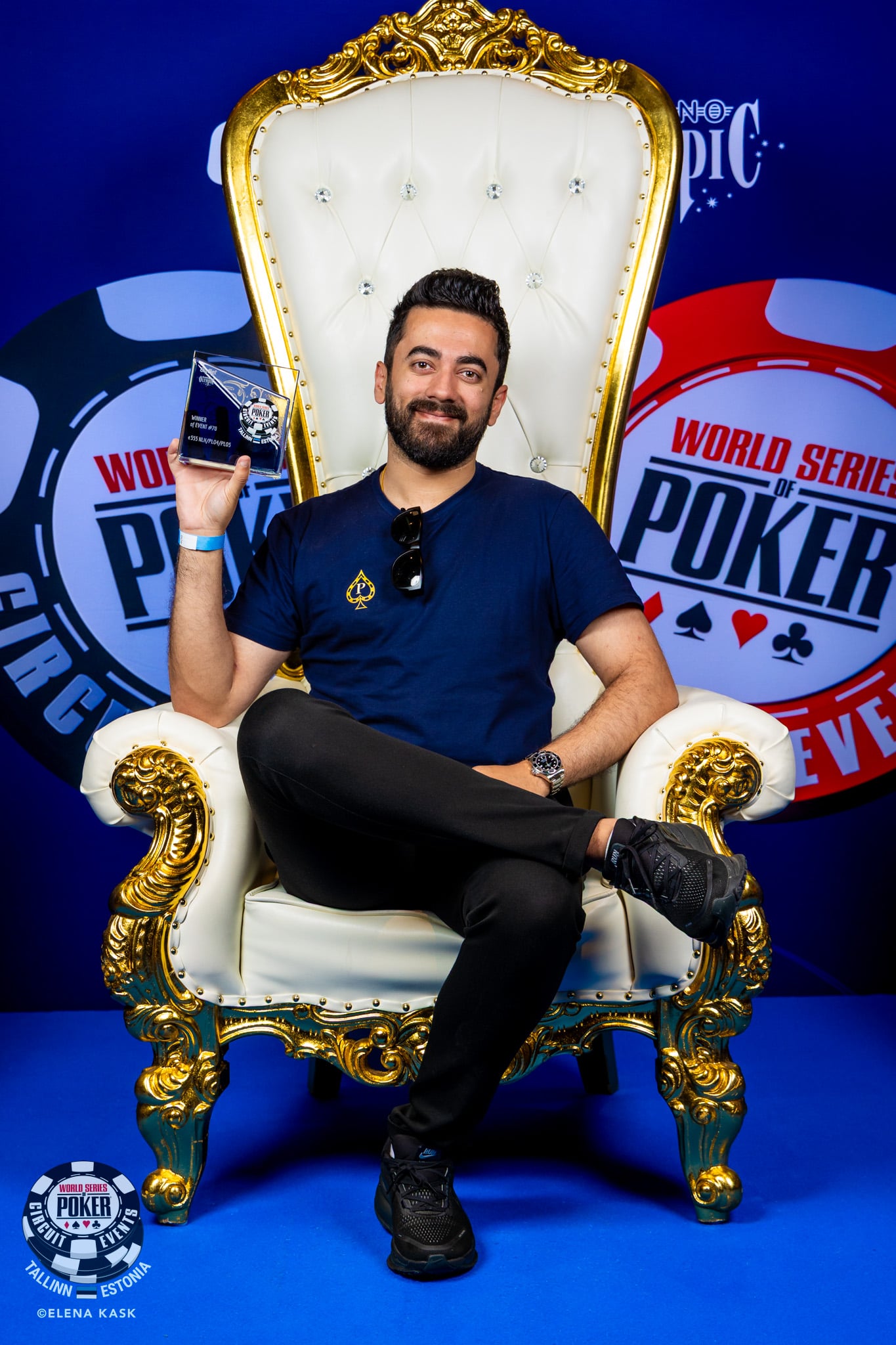
Pebel Founder Rohan Oberoi Celebrates WSOPC Tallinn 2026 Victory.
How Poker Staking Works at Pebel
Poker staking is a very simple concept: you buy a piece of a player's tournament action by investing in them directly.
Whatever they win, you get your agreed share of the winnings. If they bust without cashing, you get nothing. It's a mixture of sponsoring, investing and gambling.
What Pebel does is streamline this process without even acting as the middleman. Sounds interesting, right?
Few Simple Steps to Buy Action
Sign up and use promo code NEWBONUS: Signing up takes less than a minute, and you're good to go. Remember to use Pebel promo code NEWBONUS to get one month of Pro subscription for free.
Pick a player: Browse the listings and choose who you want to back.
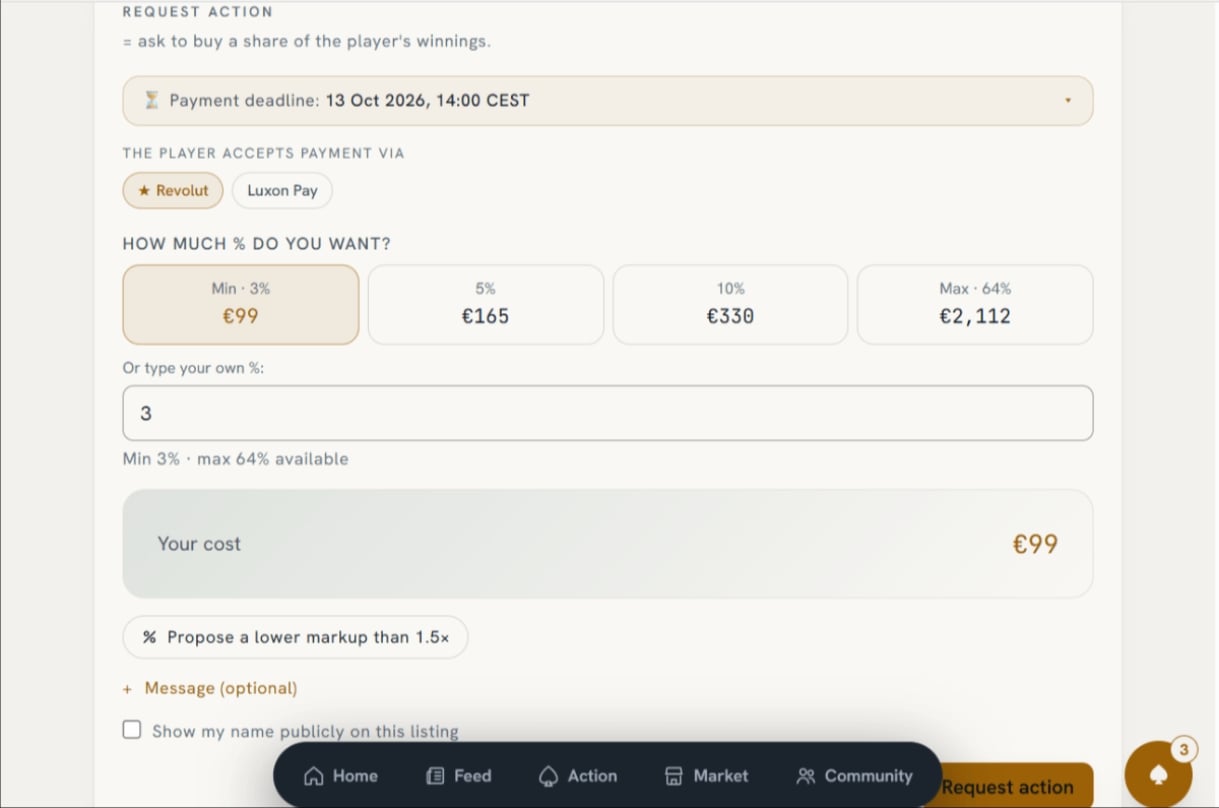
Send a request: Select the amount of action you want to buy. Pebel calculates the cost, and the request is non-binding until accepted.
Pay the player directly: Once the player accepts, pay them directly to complete the deal. Pebel records the terms, payment status and results.
However, Pebel.app does much more than just connect players and backers, so let's hear it directly from the founder himself, Mr Rohan Oberoi.
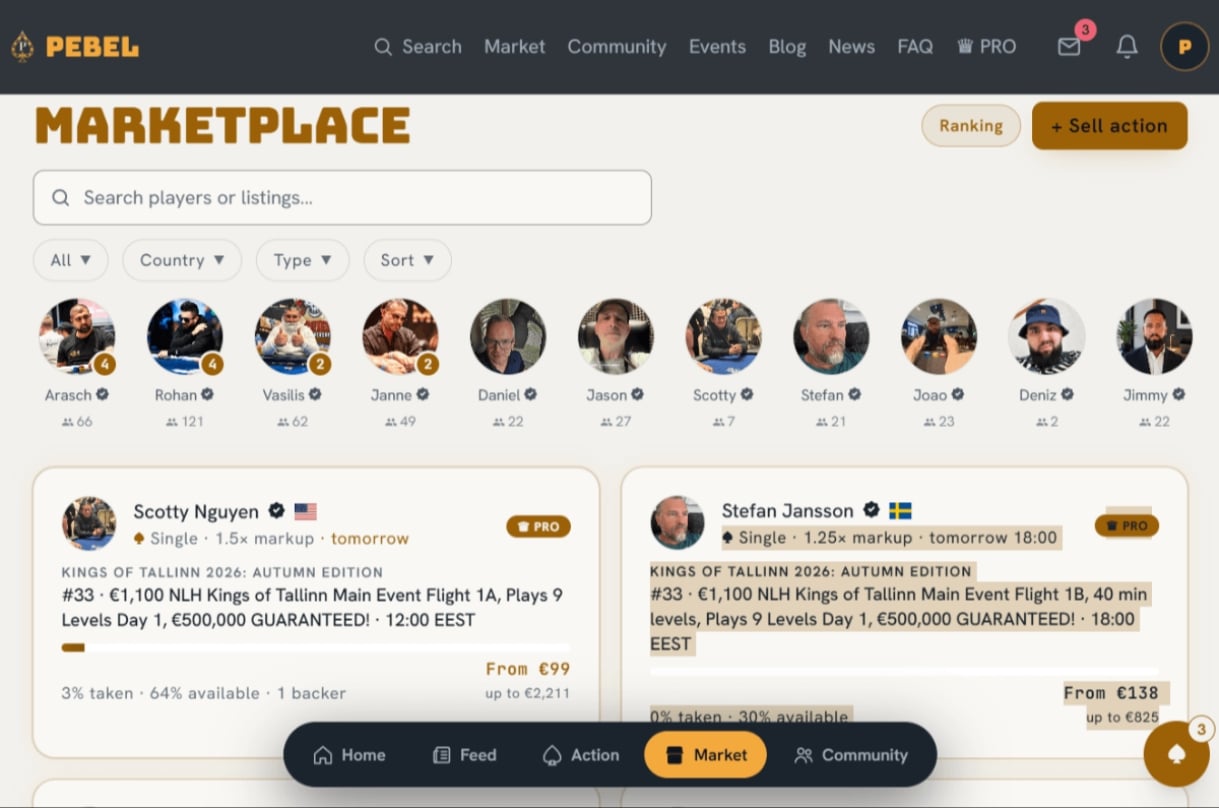
Pebel's streamlined marketplace.
Meet Rohan Oberoi, One of the Innovators Behind Pebel
For readers who don't know you, who is Rohan Oberoi? What's your background, how did poker become part of your life, and how did you get involved in staking?
I’ve always been a mix of entrepreneur, tech builder and poker player.
My background includes building an online MMORPG, working as a project manager and running different projects and businesses.
I’ve always enjoyed taking an idea, building something from scratch and then figuring out how to make people actually want to use it.
Poker scratches a similar itch for me. It’s competitive, analytical and there is always another problem to solve.
As I started playing more seriously, staking naturally became part of it. I began selling action pretty much as soon as I won my first Main Event, and I’ve also spent plenty of time on the other side backing players.
So Pebel didn’t come from someone looking at poker from the outside and deciding there was a market opportunity. It came from actually being a player, buying and selling action myself, and seeing how unnecessarily fragmented the whole process still was.
What do you enjoy most about staking, and what's your favorite staking experience so far, both as a backer and as a player?
As a backer, the best feeling is having a horse who actually brings you along for the ride.
If they’re actively posting updates and then end up on a streamed table where you can see the hole cards, there’s honestly nothing like it.
Suddenly every decision matters to you.
As a player selling action, I like doing the same thing for my backers.
I’ll post interesting hands and difficult spots so people can sweat the tournament with me instead of just getting a result at the end.
ICM spots are probably my favourite because they create the best discussions.
A play can look completely insane until you understand the stack sizes, payouts and tournament dynamics behind it.
How Pebel Was Born and Why
Let's get straight to the mystery. Pebel, what's the origin story behind the name, and what was missing from the poker staking industry that inspired you to get involved in building the platform?
Originally, Pebel meant absolutely nothing.
That was actually the whole point.
I wanted to take a word that had no existing meaning and give it one.
My goal is that when poker players hear “Pebel” in the future, they immediately think staking.
The product itself came from seeing how fragmented staking still is.
People are selling action through WhatsApp, Telegram, Messenger, spreadsheets and private conversations.
It works, but there is very little infrastructure around it.
We’re not trying to invent staking. It already happens every day. We’re trying to give an existing market better infrastructure.
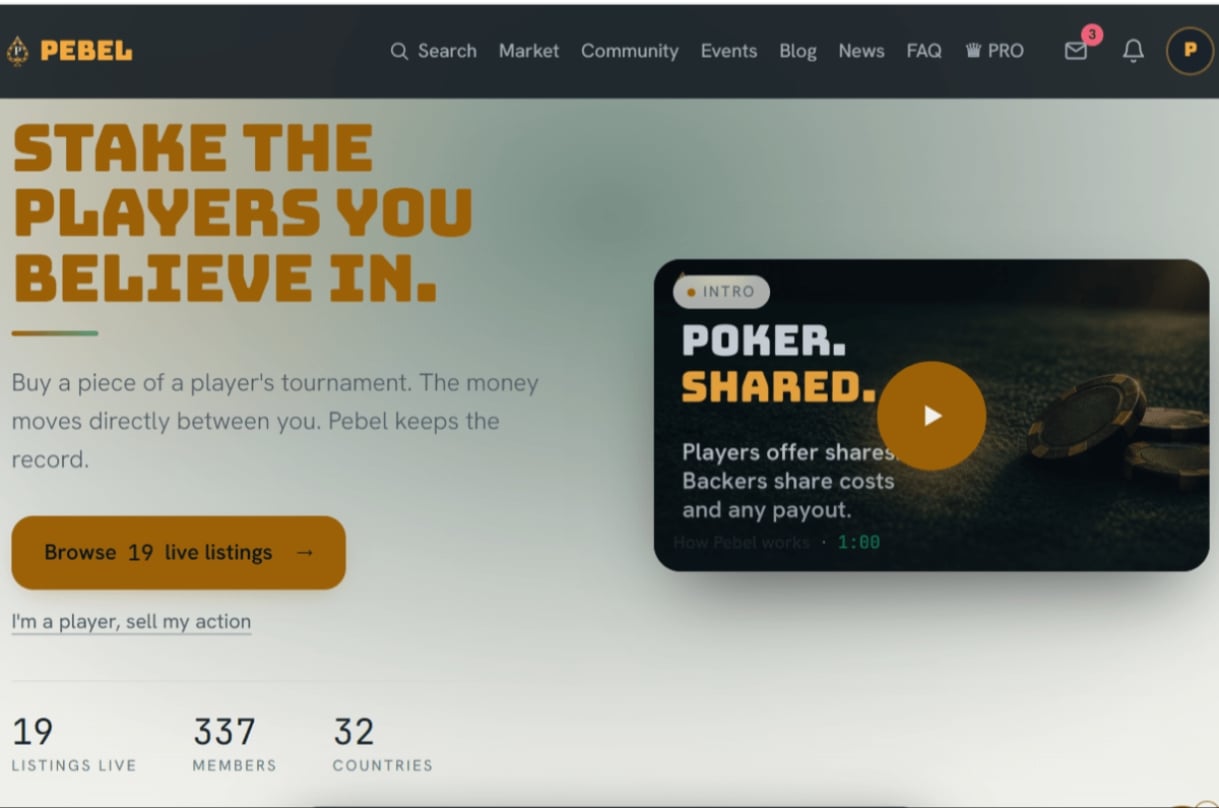
Pebel makes poker staking silly easy, with a streamlined interface and clear tutorials right on the homepage.
How does the business model work? How does Pebel make money without being the middleman?
One of the core principles behind Pebel is that we don’t need to hold users’ money to build a business around staking.
The player and backer settle directly between themselves.
Pebel provides the infrastructure around that relationship: discovery, documentation, history, tools and community.
Right now, the priority is growth and building the network rather than aggressively monetizing users.
Longer term, there are several natural opportunities around premium tools, commercial partnerships and B2B solutions.
The idea is to monetize the technology and ecosystem around staking rather than needing to sit in the middle of every payment.
Pebel.app goes beyond simply connecting players and backers. What do you think are the most useful tools and features for staking noobs like myself to tinker around with?
For someone completely new, the most important feature is probably just clarity.
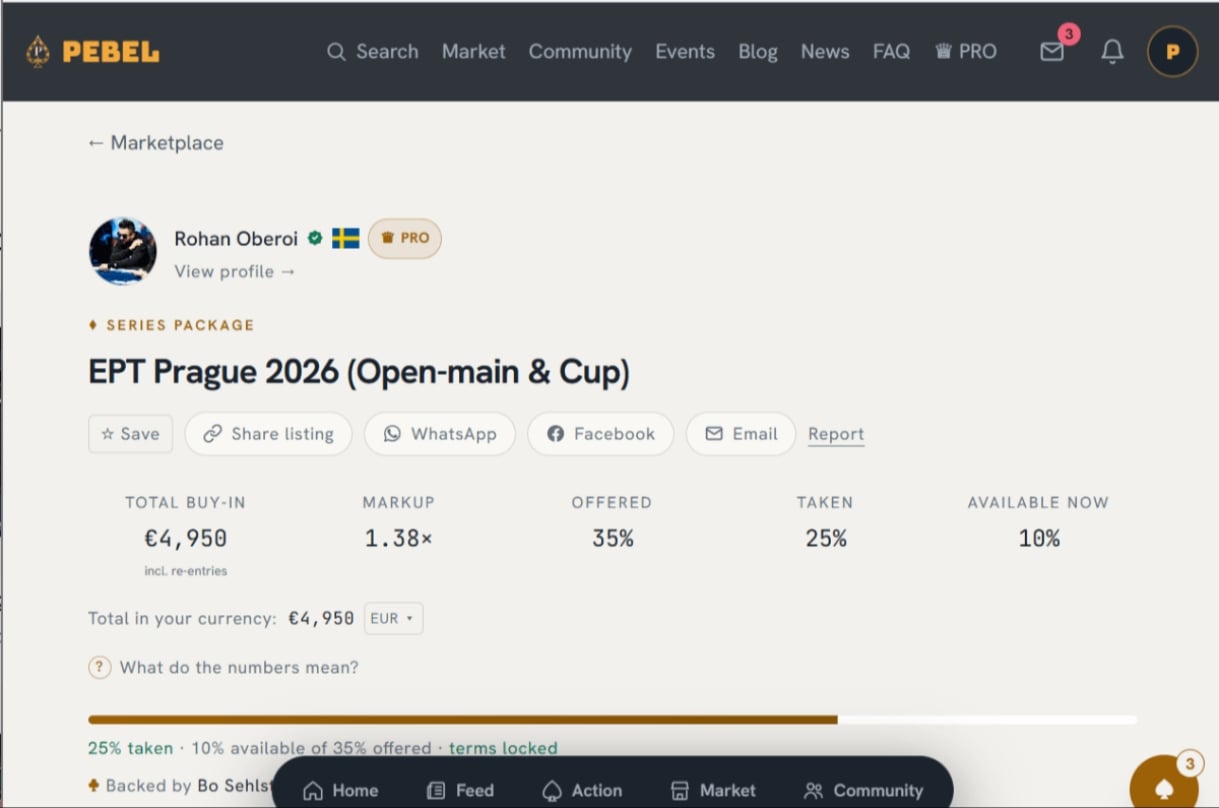
You should immediately understand what tournament the player is entering, the buy-in, how much action is available, the markup, what percentage you’re buying and exactly what you’ve agreed to.
Pebel turns something that traditionally happens through scattered messages into a structured process.
Then you can explore player profiles, staking history, the marketplace, community content and follow the activity around players and tournaments.
The goal is that someone buying their first ever piece shouldn’t need a staking manual to understand what’s happening.
Trust is a big part of poker staking. Since Pebel doesn't handle payments or guarantee that either party will honour a deal, how does the platform help players and backers find people they can trust? What tools or safeguards do you have in place, and what happens when a deal goes wrong?
Trust is probably one of the biggest issues in staking.
Pebel doesn’t pretend that an app can magically guarantee that every person will behave correctly.
What we can do is create much more transparency and accountability.
Pebel documents the agreement, the terms, confirmations, results and settlement history. That creates a proper paper trail instead of the whole agreement disappearing inside a private chat.
If a disagreement ever arises, both sides have a much clearer record of what was actually agreed and what happened afterwards.
That paper trail can be extremely useful when trying to resolve a dispute.
Over time, users also build visible staking histories and reputations through their activity on the platform.
The idea isn’t for Pebel to say, “You should trust this person.”
It’s to give you much better information to make that decision yourself, and much better documentation if something does go wrong.
What's the biggest challenge when trying to get people interested in poker staking who have never backed a player before?
I actually think the basic concept is quite easy to explain.
If you tell someone, “You buy 5% of my tournament and you’re entitled to 5% of the relevant return,” they understand it very quickly.
The bigger barriers are trust and making the process feel simple and legitimate.
Sending money to somebody after exchanging a few Instagram or WhatsApp messages can feel like a big step if you’ve never done it before.
If you can give the entire process structure, transparency and history, the barrier becomes much lower.
Could the dude who bets on football to make his weekends more interesting become tomorrow's poker staking backer?
Absolutely.
You don’t need to be a professional poker player to enjoy having a sweat.
If you own a small piece of someone playing a major tournament, suddenly you have a reason to care about every double-up, every bluff and every pay jump.
The challenge is making discovery and onboarding simple enough that people outside the existing poker staking circles feel comfortable participating.
From Poker Community to Creator Economy
Could poker staking become part of the creator economy, where people back players partly because they enjoy following them rather than purely because they expect to make a profit?
Definitely.
I think that’s actually one of the most interesting opportunities around staking.
People already follow poker players because they like their personality, content, story or playing style.
Staking can make that relationship much more interactive.
You might back someone because you think they’re a great player, but you might also do it because you enjoy following them and want a little extra reason to sweat their tournament.
Obviously there is still financial risk involved, but profit doesn’t have to be the only reason someone finds the experience entertaining.
Put it on Pebel and buy a piece of Rohan Oberoi's action.
I noticed Pebel has a tournament feed where backers can follow their players' progress during events. Could you tell us more about how it works?
This is one of my favourite parts of staking.
If I back someone, I don’t want to receive one message eight hours later saying, “Busted.”
I want to sweat the tournament.
The feed gives players a place to share their progress, interesting hands and important spots while their backers and followers can stay involved.
That’s also how I personally like to use it when I’m playing. If something interesting happens, especially a big hand or ICM decision, I want my backers to experience that journey with me.
Have you considered other ways to make following backed players through tournaments more interesting and fun?
Definitely.
There is a lot more that can eventually be done around live events, streaming and tournament coverage.
Imagine opening an event on Pebel and immediately seeing which players you’re backing, their chip counts, their latest updates and whether one of them is currently on a streamed table.
You can also imagine collaborations with tournaments or broadcasters where staking becomes another layer of the viewing experience.
Traditional poker coverage mostly gives you a reason to care about the biggest names or whoever reaches the final table.
Staking gives you a reason to care about your player from hand one.
I understand Pebel partnered with The Festival Series Malta. How did that partnership work?
The Festival Malta was a good example of the kind of partnerships we want to build. It wasn’t just about placing a logo somewhere.
We ran a Malta package campaign, created content around the festival, engaged with players and used the event as an opportunity to introduce more people to Pebel and staking.
For us, the interesting part of an event partnership is creating activity around the event itself.
Players can sell action, backers can follow their journeys, content gets created and the festival gets another layer of engagement around its tournaments.
That is much more interesting to us than traditional banner advertising.
Do you see platforms like Pebel influencing how poker tournaments are promoted and broadcast in the future? Is a Pebel-sponsored tournament in the pipeline?
I definitely think staking can become a bigger part of how tournaments are promoted and followed.
Imagine watching a streamed table and being able to see which players have hundreds of people sweating pieces of their action, or opening an event page and seeing all the Pebel players still in the tournament.
We don’t have a Pebel-sponsored tournament to announce right now, but partnerships with tours, casinos and live events are absolutely something we’re interested in developing.
The bigger opportunity is connecting the player, tournament and audience much more closely.
The Future of Poker Staking
What's stopping poker staking platforms from becoming a bigger part of the poker ecosystem today?
I don’t think technology is the biggest obstacle.
It’s habit.
Poker players have been staking each other informally forever.
If your current process is posting in a WhatsApp group and selling out in ten minutes, you need a reason to change behaviour.
That means a platform has to do much more than simply recreate the same transaction inside an app.
It needs to improve discovery, documentation, trust, reputation and the overall experience enough that using the platform becomes the obvious choice.
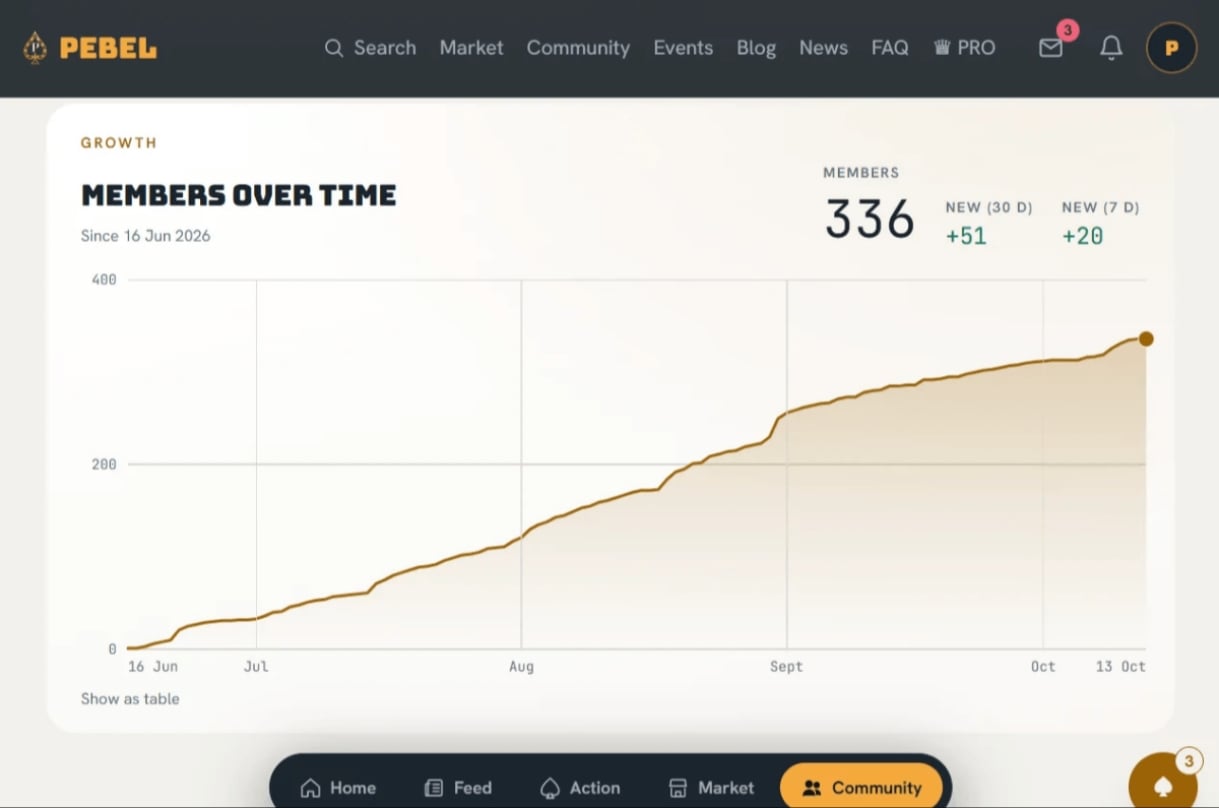
Pebel's community has grown to 336 members since June 2026, with 51 new members in the past 30 days.
Where do you see the poker staking industry in five years? What's your wildest prediction?
Realistically, I think staking becomes much more structured and visible.
Players will build proper staking histories and reputations. Backers will have better tools, portfolios and analytics.
Events will increasingly understand that staking can generate additional engagement around their players.
My slightly wilder prediction is that staking becomes part of the spectator experience. Imagine watching a major final table where you can see not only chip counts and payouts, but how many people are following pieces of each player and the communities sweating them.
Suddenly one tournament can have thousands of individual storylines.
What's the biggest misconception people have about poker staking, and what's the biggest opportunity the industry has yet to take advantage of?
One of the biggest misconceptions is that selling action means someone can’t afford to play the tournament.
For many serious players, staking is simply bankroll and risk management.
Someone might comfortably afford the tournament and still decide that playing 70% of themselves makes much more sense across a long schedule.
The bigger opportunity is turning staking from a private financial arrangement into an engagement layer around poker.
It can connect players, backers, fans, communities and events in a way poker hasn’t really explored properly yet.
If Pebel becomes much bigger, what would you want it to become beyond what it is today?
I don’t want Pebel to become only a place where someone clicks “buy 5%.”
The bigger vision is for Pebel to become a trust and reputation layer around poker.
Your staking history, relationships, activity and reputation should have value over time.
Players should be able to build an audience and a track record. Backers should have better tools to understand who they’re following. Events and poker businesses should be able to connect with those communities.
If we get that right, the marketplace itself becomes only one part of what Pebel is.
Ultimately, I’d love for Pebel to become one of those products where the name itself becomes part of poker language.
Instead of saying, “Send me your staking details,” someone just says: “Put it on Pebel.”
That would be pretty cool.
If you could buy 10% of any poker player's action in one tournament, who would you choose, and why?
That’s a tough one.
I’d probably keep it within the Pebel family and pick one of our ambassadors.
Right now, I might go with Vasilis.
He’s running extremely hot and playing really well, so if I had to choose one horse to sweat in a big event today, he’d definitely be high on the list.
But there’s one condition: I want updates.
If I’m buying 10%, I want the full sweat.
Thank you very much for the interview, Rohan, and may the poker gods bless you at the upcoming EPT Prague.
Pebel's request action interface. Buying action has never been so easy.
Put it on Pebel and Start Backing Players Today!
If you want to experience the cutting edge of poker staking and spice things up a little, join Pebel today using promo code NEWBONUS and you get 1 month PRO subscription for FREE.
Signing up is super easy. You can create a profile or log in directly with your Google account. Everything is streamlined.
We recommend to do it manually so you can test the PRO features by adding Peble promo code NEWBONUS to the code field.
When you are ready, explore the features, find a player to back, and get in on the action.
Browse player listings: Find players offering tournament action and choose who you want to back.
Calculate your stakes: Work out the cost of a stake and explore potential payouts, profit and ROI for different tournament results.
Check the rankings: See who's topping Pebel's leaderboard. Sort players by biggest cash, total cash or net profit from action sold on the platform.
Follow your horses: Keep tabs on the players you've backed and follow their tournament progress through the feed.
Set up Autostake: Set your preferences for markup, buy-in and stake size to find listings that match your criteria.
Track your deals: Keep your staking terms, reported results and confirmed settlements organised in one place.
Be part of the Pebel community: Connect with other poker backers, discover players, and become part of Pebel's growing staking community.
Stay tuned for more news from the world of shared poker action and staking entertainment.